Nestled deep within the vast expanse of Egypt’s Western Desert, near the Libyan border, lies one of the world’s most enchanting sanctuaries: the Siwa Oasis. Surrounded by hundreds of kilometres of undulating golden dunes and harsh gravel plains, this lush paradise bursts forth with millions of date palms, olive groves, and hundreds of natural freshwater and saltwater springs. For centuries, Siwa was an isolated realm, preserved by its geographic remoteness and distinct Berber heritage. Today, it stands as a captivating blend of ancient history, unique local traditions, and extraordinary natural beauty.
While many travellers opt for long-distance bus journeys or pre-packaged tours, choosing to explore the Siwa Oasis by car unlocks an entirely different dimension of travel. Setting off on a road trip across the Egyptian desert grants you complete freedom over your itinerary, allowing you to venture far off the beaten path.
Driving yourself means you can pause at sweeping roadside vistas, visit remote archaeological ruins without the pressure of a tour group's strict schedule, and discover hidden turquoise salt pools tucked away in the countryside. The journey itself, crossing the dramatic transition from coastal Mediterranean plains to the deep interior of the Sahara, is an unforgettable adventure that makes a road trip to Siwa one of Egypt’s finest overland experiences.

Timing is critical when planning a desert drive across Egypt. The ideal window to undertake this trip is between October and April. During these cooler months, daytime temperatures in the oasis remain exceptionally pleasant, typically ranging from twenty to twenty-five degrees Celsius. Nights can become crisp and cool, which creates perfect conditions for evening campfires and comfortable sleep.
Conversely, the summer months between May and September should generally be avoided. Desert heat during high summer can easily exceed forty degrees Celsius, making long-distance driving risky for both vehicles and passengers, while outdoor sightseeing during the day becomes uncomfortably hot.
Navigating Egyptian highways and desert regions requires proper documentation to ensure smooth passage through routine security checkpoints. First and foremost, foreign drivers must carry a valid driving licence alongside an official International Driving Permit (IDP). You will also need your original passport, the vehicle’s registration documents, and comprehensive insurance papers.
It is highly recommended to print a few physical photocopies of your passport, visa, and driving licence before leaving major cities. Police and military officers at checkpoints along the desert highway frequently request these copies to log travellers passing through. If you intend to take your vehicle into the deep dunes of the Great Sand Sea, you will also need to organise desert entry permits through a licensed local guide in Siwa.
Choosing the right vehicle depends entirely on the scope of your planned adventure. If your goal is to travel from Cairo or Alexandria to Siwa and explore the paved roads connecting the oasis’s main archaeological sites, towns, and paved salt lake access roads, a standard front-wheel-drive sedan is perfectly sufficient. The highway connecting Marsa Matruh to Siwa is fully paved.
However, if you intend to cross deep dunes or reach remote off-road hot springs, a robust four-wheel-drive vehicle with high ground clearance is essential. Before departing from your rental agency in Cairo or Alexandria, perform a thorough inspection: check the condition of all four tyres plus the spare, test the air conditioning, verify fluid levels, and ensure a jack and tyre iron are fully functional.
Driving through remote desert corridors demands self-sufficiency. Always stock your boot with far more supplies than you anticipate needing. Carry at least ten to fifteen litres of drinking water per person, along with non-perishable snacks, non-perishable energy bars, and a basic first-aid kit. A reliable portable power bank, a strong torch, and a roadside emergency kit containing jumper cables should always be on board.
Cellular network signals can drop along remote stretches of the desert highway, so download offline maps on applications before departure. Finally, pack high-SPF sunscreen, wide-brimmed hats, polarising sunglasses to combat intense glare off the sand, and warm layers for the sudden temperature drops after sunset.

Your journey begins with a departure from Cairo, driving west along the Mediterranean coastal highway towards the port city of Marsa Matruh. This initial leg offers lovely views of the turquoise sea. Upon reaching Marsa Matruh, you will turn south onto the dedicated Siwa Road, which carves a 300-kilometre path directly into the heart of the Western Desert. As the coastal greenery fades into stark, stunning arid landscapes, the driving experience becomes serene and meditative.
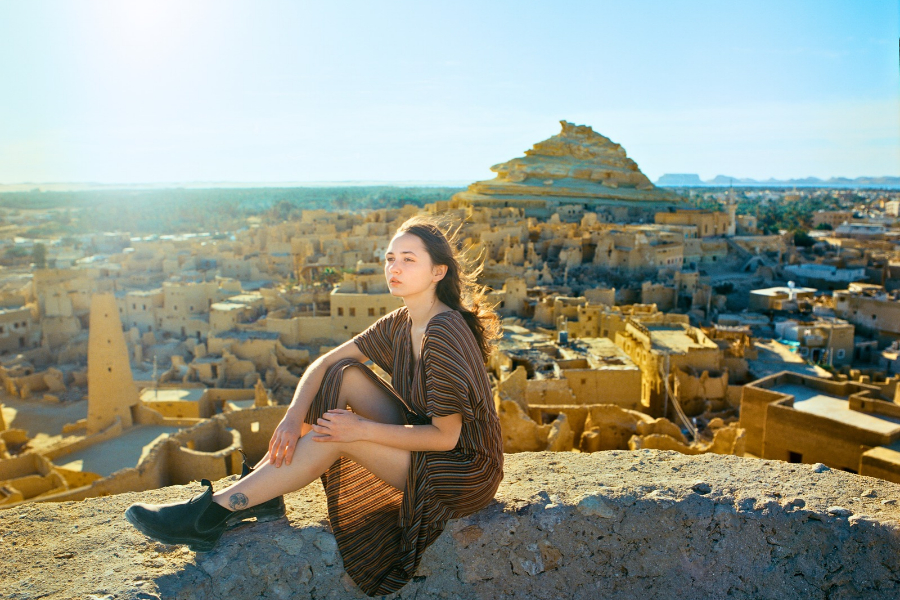
Arrive in Siwa by late afternoon, check into your chosen accommodation, whether a traditional mud-brick eco-lodge or a comfortable desert hotel. After settling in, take a short drive to the centre of town to visit the magnificent Shali Fortress. Built in the thirteenth century from kershef, a traditional blend of salt-rich mud, clay, and palm logs, this towering fortress once protected the locals from nomadic raids. Park your vehicle at the base and walk up the carved earthen paths to watch your first Siwan sunset over the palm canopy.
Begin your second day with a short drive east to the Temple of the Oracle of Amun, perched atop a rocky hill in the ruined village of Aghurmi. This sacred historical site gained world fame in 331 BC when Alexander the Great crossed the desert to consult the oracle, who confirmed him as the son of Zeus-Amun. Wander through the stone halls and admire the sweeping views of the surrounding palm groves.
From the temple, drive a few minutes to Cleopatra’s Bath, also known as Ain Juba. This deep, stone-lined natural spring is fed by underground subterranean waters. Legend suggests the famous queen herself once swam here. Enjoy a refreshing swim in the crystal-clear, bubbling spring before relaxing at one of the surrounding garden-shaded cafes for a lunch of fresh olive oil, flatbread, and Siwan dates. In the afternoon, take your car north to Gebel al-Mawta, or the Mountain of the Dead. This conical hill is honeycombed with dozens of rock-cut tombs dating from the Pharaonic, Ptolemaic, and Roman periods. Park at the base and tour the beautifully preserved interior murals of the Tomb of Si-Amun.

On day three, prepare for one of the most visual highlights of your road trip: Siwa’s famous salt lakes. Drive east past town towards the commercial salt quarries. Here, hyper-saline turquoise water fills deep pools carved out of the white salt crust. Because the salt concentration is higher than that of the Dead Sea, you will float effortlessly on the surface. Bring plenty of fresh water in your car to rinse off the crystalline salt crust after swimming.
In the afternoon, drive southeast to Dakrour Mountain. Known locally for its therapeutic sand baths during the summer, this limestone landmark offers a fantastic light hike. Park near the base and trek to the summit for an unobstructed panoramic view across the entire oasis basin. To finish your day, drive your car across the causeway to Fatnas Island, situated on the western lake of Birket Siwa. Grab a glass of hot mint tea at the lakeside palm garden and watch the sun dip dramatically beneath the horizon.
Dedicate your final day to the wild, shifting landscapes surrounding Siwa. Drive southwest toward Bir Wahed, a natural hot spring located right at the boundary where the palm groves yield to the colossal dunes of the Great Sand Sea. Swimming in the warm, mineral-rich spring surrounded by soaring dunes is a surreal experience.
Because navigating the deep dunes of the Great Sand Sea requires specialist sand-driving techniques and precise tyre deflation, it is best to leave your rental car parked safely at the desert edge and join a licensed local Bedouin guide in a specialised off-road vehicle for the deeper dunes.
Spend the afternoon experiencing thrilling dune bashing, trying your hand at sandboarding down steep slip-faces, and searching the desert floor for prehistoric marine fossils left behind when the Sahara was an ancient ocean bed. Conclude your trip with a traditional Bedouin dinner cooked beneath the stars, featuring sweet desert tea and slow-roasted chicken.

Plan Daytime Desert Trips: Always schedule your driving shifts between Marsa Matruh and Siwa during daylight hours to ensure maximum visibility. Unlit desert stretches, sudden sand drifts, and heavy long-haul freight trucks make nighttime highway driving significantly more hazardous.
Carry Extra Fuel and Cash: Always top off your petrol tank at major towns like Marsa Matruh and keep a reserve above half a tank while exploring Siwa. Additionally, bring plenty of local Egyptian pounds in small bills, as small desert fuel stations and toll booths rarely accept card payments.
Keep Documents on Hand: Organise physical copies of your passport, driver's licence, International Driving Permit, and rental agreements in a dedicated folder on your dashboard. Checkpoint officers along the desert route routinely request these documents to verify foreign travellers quickly and log entry.
Utilise Mobile Offline Maps: Cellular coverage can be spotty or drop completely along the three-hundred-kilometre desert corridor leading south into the oasis. Download offline maps on your phone in advance, and carry a high-capacity power bank to keep your device charged.
Drive Only on Paved Roads: Drive standard two-wheel-drive rental vehicles strictly on paved highways, concrete access paths, and well-trodden gravel tracks connecting main attractions. Never attempt shortcuts across soft sand shoulders, as standard vehicles can become bogged down almost instantly.
Respect the Local Customs: Siwa has a traditional Amazigh culture, so drivers and passengers should dress modestly when leaving the car to visit local markets, ruins, or villages. Keep shoulders and knees covered, and cover up appropriately when driving between swimming spots like Cleopatra’s Bath or the salt lakes.
Slow Down on Rural Tracks: Unpaved tracks around Siwan agricultural groves and salt quarries are frequently shared with donkeys, tuk-tuks, bicycles, and roaming camels. Reduce your speed significantly when navigating these narrow farm roads to ensure safety for both yourself and residents.

Is it safe for tourists to drive across the Siwa Oasis? Yes, driving independently through the region is generally safe because the main highway from Marsa Matruh to Siwa is fully paved and monitored by security checkpoints. Drivers need to follow speed limits, carry the required documentation, and avoid driving late at night.
How long is the travel from Cairo to the Siwa Oasis? The total driving distance is roughly 730 kilometres, which typically takes between eight and ten hours. This duration accounts for mandatory stops at military checkpoints, fuel breaks, and traffic leaving Cairo.
Can I explore the Siwa Oasis using a standard rental car? A standard sedan is completely adequate for travelling along paved roads between town centres, historical sites, and the main salt lakes. However, a robust four-wheel-drive vehicle is necessary if you intend to navigate the deep dunes of the Great Sand Sea.
Can I drive directly on the desert sand in the Siwa Oasis? You should never attempt to drive on the open desert sand with a standard rental car or without an experienced local desert guide. The soft dunes of the Great Sand Sea require specialised four-wheel-drive vehicles, lowered tyre pressure, and advanced sand-driving techniques to avoid getting stranded or damaging the vehicle.
Where must I refuel my car along the way to Siwa Oasis? You should fill your petrol tank in the coastal city of Marsa Matruh before turning south onto the desert highway. Once inside the oasis, fuel up at the main stations in Siwa town and avoid letting your tank fall below half full.
Driving across the Egyptian desert to discover Siwa Oasis is an extraordinary adventure. From the moment you leave the coastal highways and venture into the Sahara, renting a car transforms your simple vacation into an unforgettable expedition. With your own ride, you can experience the full spectrum of Siwa Oasis’ wonders on your own terms, whether you plan to dip in the salt pools or take a stroll along ancient temples.
If you are seeking a destination far away from crowded tourist hotspots that combines stunning natural beauty with rich history and unique culture, look no further. Map out your route, pack your bags, and book your rental car to hit the open road and uncover the timeless magic of the Siwa Oasis.