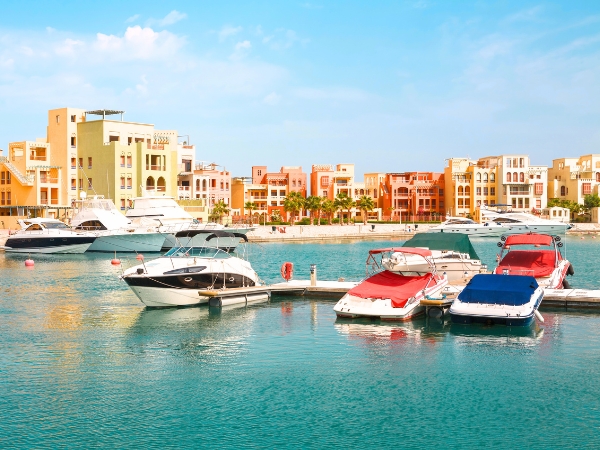
The sprawling landscapes of Egypt, from the sun-drenched Mediterranean coast to the jagged peaks of the Sinai Peninsula, offer a topographical diversity best experienced from behind the wheel. While most visitors are ushered between landmarks in crowded coaches, self-driving unlocks a level of autonomy that allows you to discover remote temples and seaside cafes at your own pace.
However, renting and driving a car in the Land of the Pharaohs requires a shift in mindset. Success on these roads means embracing a system of organised chaos, where lane markings are suggestions, and communication is non-verbal. By understanding the intuitive flow of local traffic and adopting a defensive driving method, you can transform a daunting prospect into a safe and exhilarating adventure.
In many Western countries, the car horn is a tool of aggression. In Egypt, it is a vital instrument of communication. Drivers use their horns to signal their presence, indicate an intention to overtake, or even say a quick "hello". You will hear a constant symphony of beeps; do not take them personally. A short, sharp double-tap usually means "I am here" or "I am about to pass you". Learning to use your horn proactively to alert others of your position will make you a much safer driver in the local context.
Lane markings in Egypt are often treated as artistic suggestions rather than strict boundaries. On a road marked for three lanes, you will frequently find five or six rows of cars jostling for position. The middle of the road is wherever there is a gap. The key is to keep your eyes moving and your focus sharp. Do not rely on the car next to you staying in their perceived lane; instead, watch their front wheels and their general trajectory. If a gap opens up, someone will fill it, so maintain a steady but flexible position.
Overtaking is a national pastime on Egyptian highways. Because slow-moving trucks often occupy the right lanes, faster traffic will pass on both the left and the right. This means you must be hyper-aware of your mirrors. Before changing your position, check over your shoulder and use your indicators, but do not assume the indicator gives you the right of way. If someone behind you flashes their high beams, they are notifying you that they are approaching at high speed and intend to pass; it is safer to move over and let them through.
The best mindset for driving in Egypt is one of extreme defensive driving combined with a "go with the flow" attitude. Do not expect other drivers to follow traditional right-of-way rules. Generally, the larger vehicle has the unofficial right of way. If a bus or a large truck wants to merge, let them. Keeping a cool head and avoiding road rage is essential. By staying calm and anticipating that others may make sudden moves, you can navigate the busiest Egyptian intersections with minimal stress.
Egypt makes extensive use of speed bumps, known locally as "sleeping policemen", to control traffic flow near villages and intersections. These bumps are frequently made of asphalt or concrete and can be incredibly high. Most importantly, they are often unmarked and blend perfectly with the colour of the road. Hitting one at high speed can cause significant damage to a rental car’s suspension. Watch the brake lights of the cars ahead of you. If they suddenly slow down on a clear stretch of road, there is almost certainly a speed bump ahead.
While mobile data coverage is generally good along major corridors, there are significant dead zones in the mountains and the deep desert. Relying solely on a live GPS connection is risky. Before setting off, download offline maps of the entire country or your specific route on your phone. Additionally, it is wise to cross-reference your digital route with local signage. If a GPS suggests a shortcut through a remote desert track, stick to the main paved highway.
One of the most important safety rules for tourists is to avoid intercity travel after sunset. Rural and desert roads are often poorly lit, and it is common to encounter vehicles driving with no headlights or only dim parking lights. Furthermore, pedestrians, livestock, and unlit carts are difficult to spot until you are right upon them. The risk of hitting a pothole or an unmarked speed bump increases significantly in the dark. Plan your departures early to ensure you reach your destination well before dusk.
When driving in Egypt, particularly on highways connecting major cities or in the Sinai region, you will encounter numerous security checkpoints. These are a standard part of life and are there for your safety. As you approach, slow down, turn off your high beams, and turn on your interior light if it is dark. Have your identification ready, though you may often be waved through once the officer sees you are a tourist. Always remain polite and patient. Under no circumstances should you take photographs of the checkpoints or military installations.
In major cities, parking is managed by an informal network of men known as "Sayess". When you pull into a street, a Sayess will likely appear to guide you into a tight spot, often moving other cars or placing a cardboard sunshade on your windscreen. This service is part of the local economy. When you return to your vehicle, it is customary to provide a small tip, typically between 10 and 20 Egyptian Pounds. They act as informal security for your vehicle, and establishing a friendly rapport with them can make urban driving much less stressful.
While petrol is relatively inexpensive in Egypt, the distance between stations can be vast, especially in the desert regions. It is a common mistake to assume the next town will have a functioning pump with the specific grade of fuel you need. A good rule of thumb is to never let your fuel gauge drop below the halfway mark. When you see a modern, well-lit station like those operated by Chillout or Emarat Misr, take the opportunity to top up your tank and restock on supplies.
Driving in Egypt is more than just a means of transport. It is an immersive cultural experience that places you at the heart of the country's vibrant daily rhythm. While the lack of lane discipline might be intimidating, you will soon find that there is a method to the madness. By mastering the horn, staying alert for speed bumps, and avoiding the hazards of night driving, you can enjoy the unparalleled freedom that a private vehicle provides.
The open road in Egypt leads to breathtaking vistas, ancient wonders, and the kind of spontaneous encounters that define a truly great holiday. If you are looking for an adventure that goes beyond the standard guided tour, there is no better way to see this magnificent country.
Do not let the reputation of the chaotic traffic deter you. With a bit of confidence and the tips outlined above, you are ready to take the wheel. Rent a car for your Egyptian road trip today and discover the magic of the desert at your own pace. Your journey through history is waiting.